

They don’t have a city name, and they don’t even have a real mascot or a graphic for me to use. I mean, they have that elephant or whatever, but I couldn’t find a good enough elephant that wouldn’t look weird. So this is the plainest team preview graphic of the series. We’ll have to live with it.
Full Series Links and Explanation Page Here
Podcast
Intro
The timing was providential on this one! Over the weekend, I wrote up a script to calculate my own park factors. There are a lot of ways to do park factors, and most of them are stupid and wrong. I’m not saying I have the magic formula. I’m not sure such a thing exists. And I’m certainly not saying that my way of doing it is better than Baseball Savant or whatever other sources you’ll find out there. But it might be! I don’t know how those other people code it. But I know the way I coded it, so I can say that I’ve navigated around some of the classic problems you get when trying to derive park factors.
The first thing you have to [somehow] avoid is home team bias. Aaron Judge plays for the Yankees, right? He hits a lot of home runs. He’s involved in nearly 100% of games played at Yankees Stadium. That alone can boost the park’s home run factor if you don’t adjust for it. So if you take the easy route and just calculate home runs per batted ball in each park, you’re going to massively overweigh the parks that have the best home-run hitting lineups, and vice versa. The way around that is to use only the visiting teams when doing the calculation. That still isn’t great, because there’s some scheduling bias (the Red Sox the Aaron Judge more than the Phillies do, for example), and also some home team pitching staff bias (Cristopher Sanchez is great at limiting homers, and he throws half of his starts in Philly, which can pull down the park factor there).
One thing you could do is just look at similar struck balls in play and see the results on them. Find home runs per barrel at each park, for example. Or go even further and just look at balls hit between 95 and 110mph or something like that. But all of that really pulls down the sample size and causes noise that way.
You also have the teams messing with their ballparks in the offseason. Sometimes that’s obvious to see, like the left field wall move in Camden Yards a few years ago. Sometimes it’s less obvious, and sometimes unreported. Simple things like a change to the color of the wall that the hitter sees behind the pitcher can make a difference. The weather varies year-to-year. Just a ton of stuff to account for, and it’s basically impossible to account for everything without costing yourself some accuracy in other ways.
Anyways, I’ve given it a shot. You can check that out here.
The reason I said it’s providential is that there were two park factors that made a big difference in the 2025 season. That was the Rays moving to the minor league stadium for one season, and the Athletics going from Oakland to Sacramento. So we only have 81 MLB games played in this park, which is a very small sample for such a thing, but when we go with it, we see that Sutter Health Park graded out as the second-hitter-friendliest park in the league.

TD Ballpark is the minor league stadium the Blue Jays had to play in back in 2021 because of COVID stuff. It turns out that minor league stadiums are generally smaller than Major League stadiums.
The Athletics have at least two more years in Sacramento before moving to Vegas. They did start work on the stadium last summer, so it’s definitely happening, but for 2026 and 2027, the A’s are in this very advantageous ballpark for hitters.
That fits their team build, generally. They haven’t had a good pitching staff since Moneyball. That’s probably an exaggeration, but who can remember anything about the Athletics between like 2005 and 2021? What a forgettable franchise. They’re set up to get into a bunch of slugfests again in 2026. The pitching stuff has gotten worse. They don’t even have those four weekly lockdown innings from Mason Miller anymore.
Let’s get into it.
Hitters
Nick Kurtz
Age: 23
Pos: 1B
We start with one of the biggest surprises of the 2025 season. Plenty of people thought that Nick Kurtz would be a good Major League hitter in a hurry, but I don’t think anybody saw a 36-homer season coming from Kurtz in just 117 games.
The guy went bonkers, and he will be projected among the MLB home run leaders in 2026.
The slash line landed at .290/.379/.619, so he gave you an elite (by today’s standards) batting average and OBP as well. He stole only two bags, so he was more of a four-category guy rather than a five-category stud.
Let’s keep talking about the good news before we get to some of the hesitation. The quality of contact:
→ .382 xwOBA
→ 108.5 EV90
→ 114.6 Max EV
→ 40% Sweet Spot%
→ 38% GB%
→ 13.2% Air Pull%
→ +0.58 xwOBA OE
When he was getting the ball in play, he was one of the best in the league. Add to that the fact that the Athletics will play this year in that minor league park again, and you feel really good about a 35+ homer, 100+ RBI season coming from Kurtz.
He was even better after the first few weeks when he was getting acclimated. If we just look at what he did in his 379 PAs after June 1st:
→ .304/.398/.669, 1.067 OPS, .394 xwOBA
Ridiculous stuff.
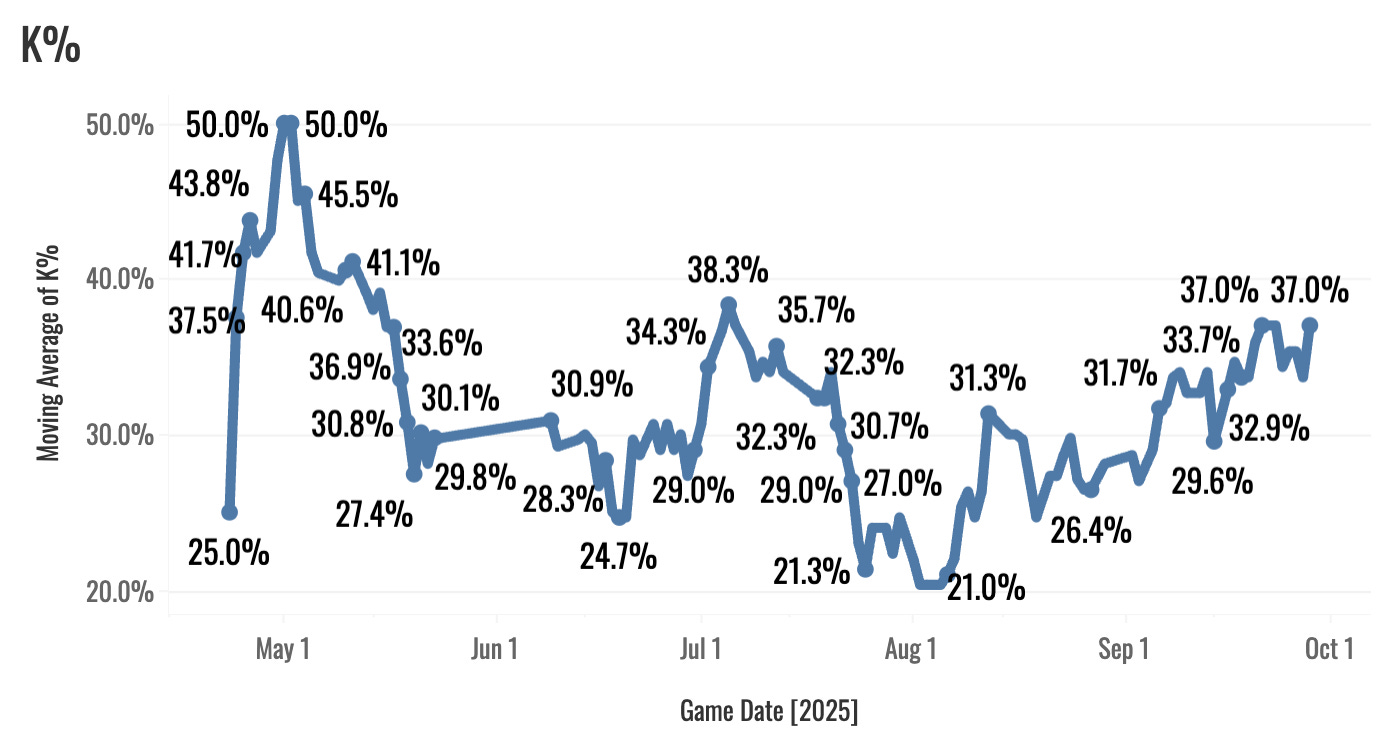
But now the bad news. He struck out a lot. The K% finished at 31%, the zone-contact rate at 72%. And it wasn’t something that he improved on as the year went by.
He also struggled against lefties:
→ 153 PA, .197/.261/.423, 9 HR, 35% K%, .177 xBA, .264 xwOBA
Let me remind you about how hard it is to be a fantasy stud hitter with this sort of strikeout rate. Let’s go back to 2021 and find every hitter with at least 400 PAs and a K% above 30%. And then let’s sort by OPS.
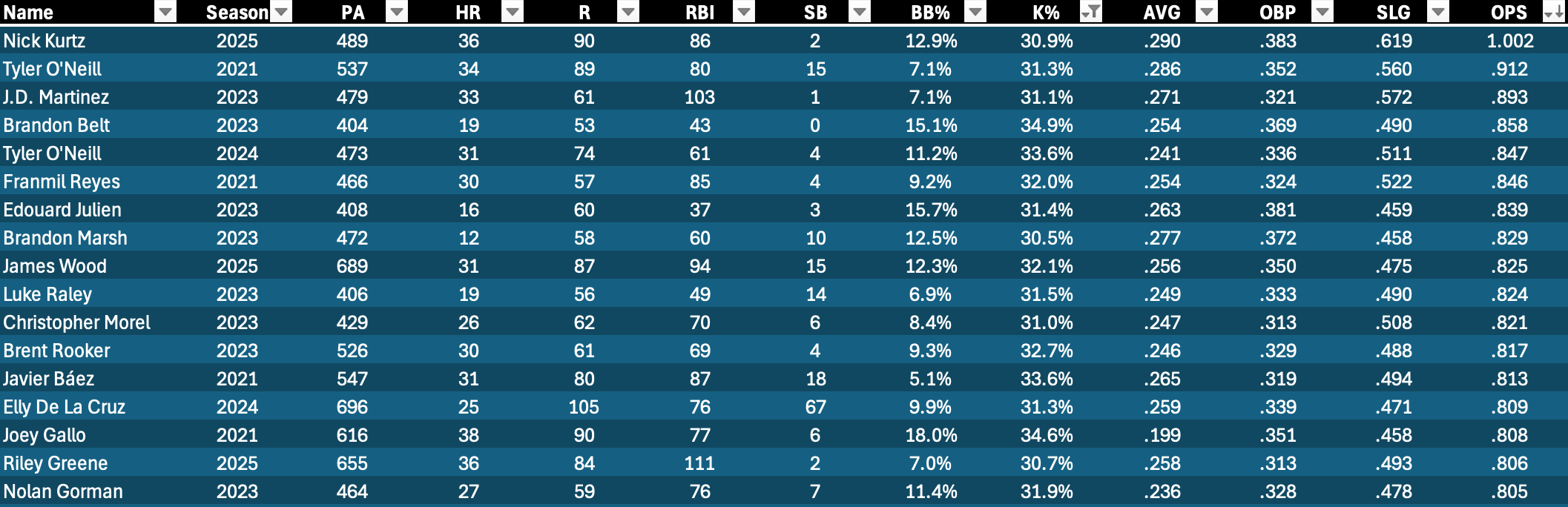
I found 64 hitter seasons in these last five that qualify with the above criteria. Only one of those players managed an OPS above one. Only one other went above .900 (2021 Tyler O’Neill with his .366 BABIP and 26% HR/FB). Only 16 went above .800.
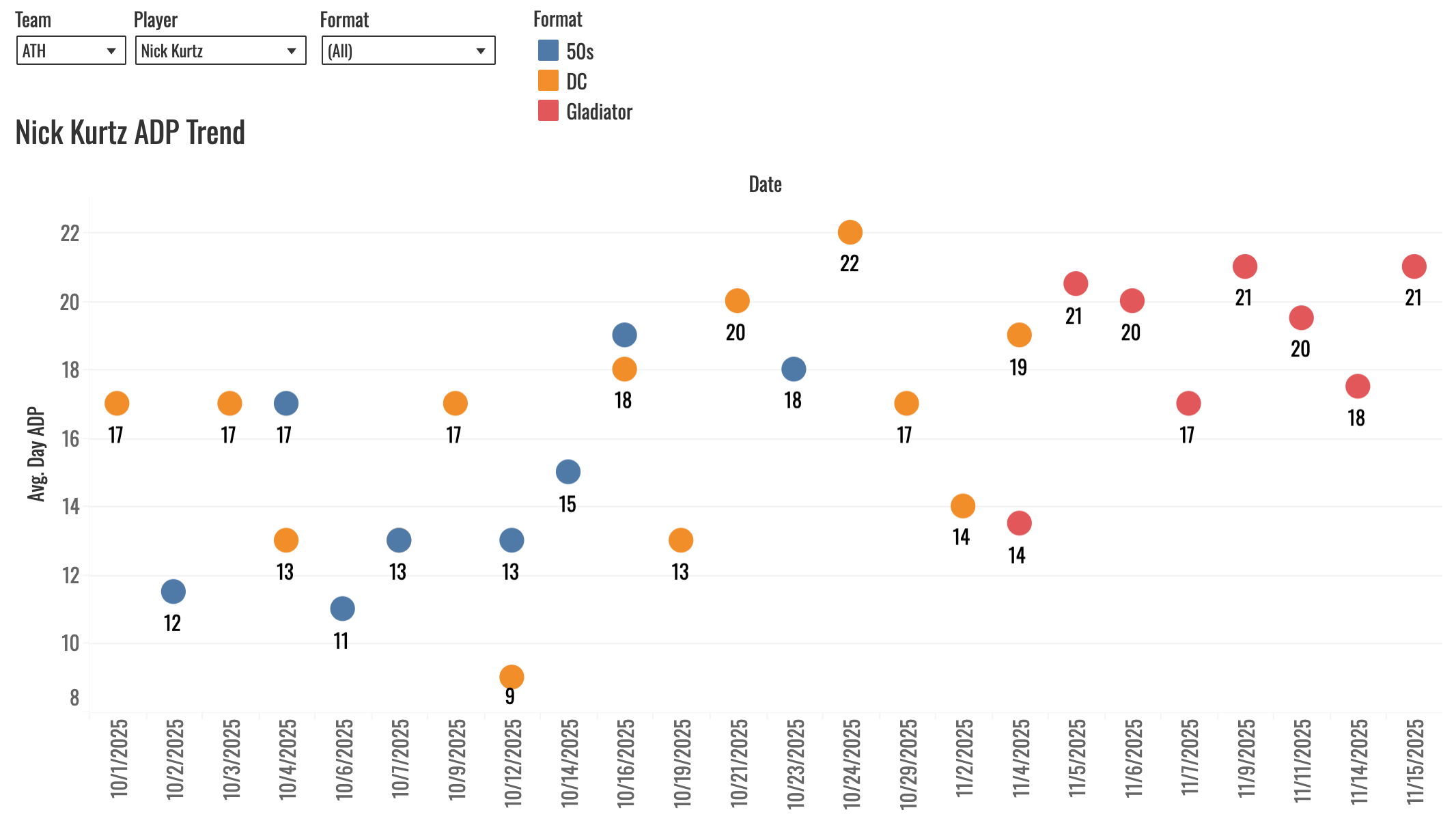
If you’re going to get a sub-.900 OPS from Kurtz next year, he’s not going to be worth a top 25 pick. And he’s going in the top 20 right now.
His 90 runs scored were the second-most in this sample (Elly in 2024), his 36 homers were tied for third-most (Joey Gallo and Adam Duvall in 2021). He had just about as good a season as you can possibly have while striking out that much.
So there is regression coming in the slash line. Perhaps majorly so. I could see him losing 40 points on the batting average and a similar number in OBP.
But that assumes that he doesn’t improve in strikeout rate, which is very well might. In fact, I’d probably expect it. Aaron Judge is a reasonable comp for Kurtz right now. I think that’s fair. And remember Judge’s history of strikeout rates:
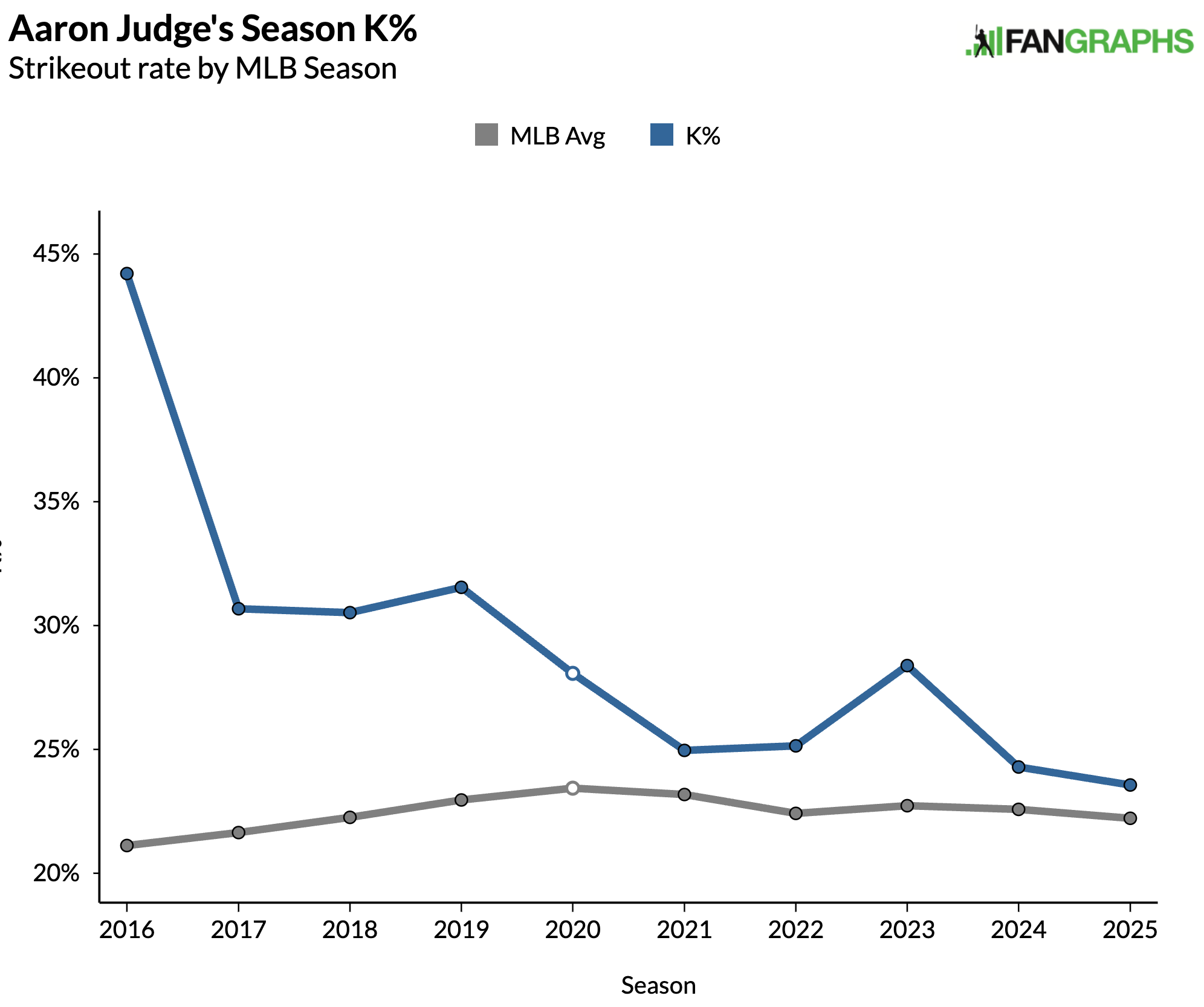
Judge was still a great hitter from 2016 to 2021, but it was not until he got the K% down into the mid-20s that he was truly a first-round fantasy hitter.
I think you’re paying too high a price to get Kurtz right now. But maybe the price will come down.
I think that’s about all we need to say about Kurtz. The power is elite, but there are issues with the contact, and he’s not going to be a base stealer. I don’t think he’s a second-round bat, and I don’t think he’ll be my #1 first baseman, but he does certainly have round-one upside if he hits on that ceiling outcome, which is something like 60 homers and 130 RBI.
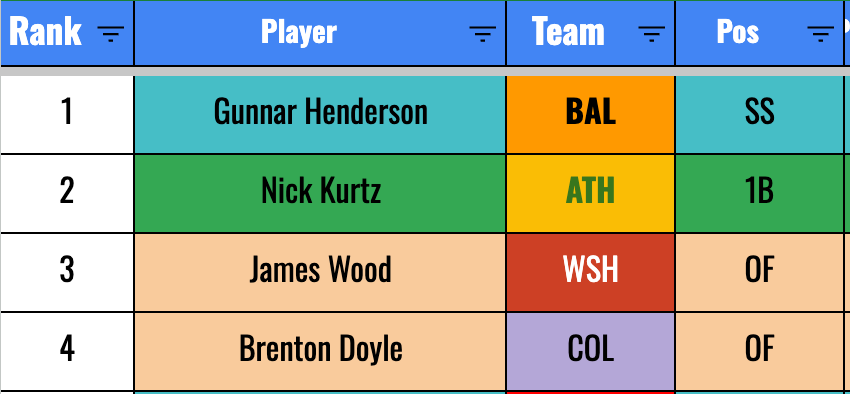
Ranking
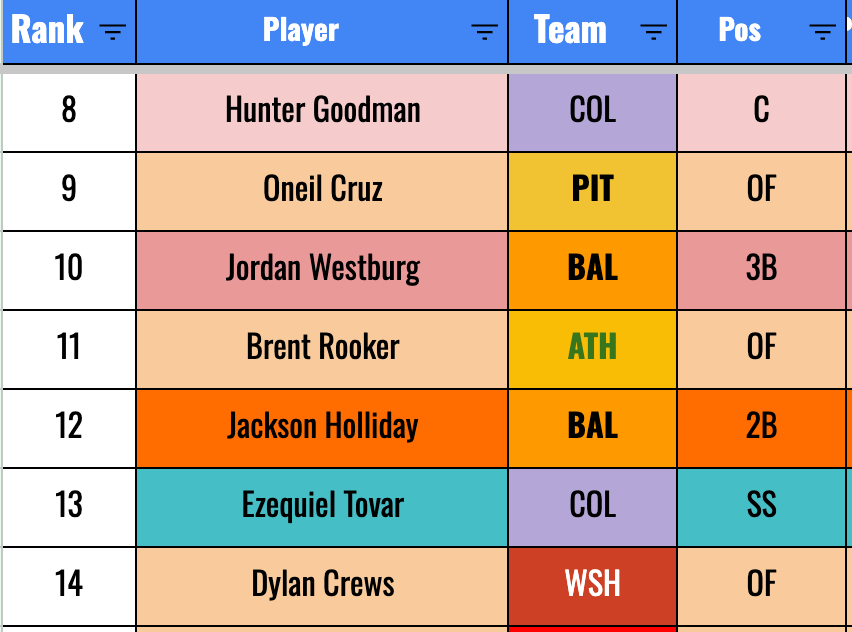
Brent Rooker
Age: 31
Pos: OF
Rooker has been the headliner for a couple of years before Kurtz came to town. Now they have two mashers in the lineup. It’s a scary spot to pitch against the Athletics in those Sacramento games these days.
Rooker did more of what we’ve come to know him for in 2025, albeit to a lesser extent.
→ 162 GP, .262/.335/.479, 30 HR, 92 R, 89 RBI, 6 SB
That was after a 145-game, 39-homer season in 2024. So we didn’t get the 40+ homer explosion driven by that advantageous home park.
Rooker did cut down on the strikeouts, though.
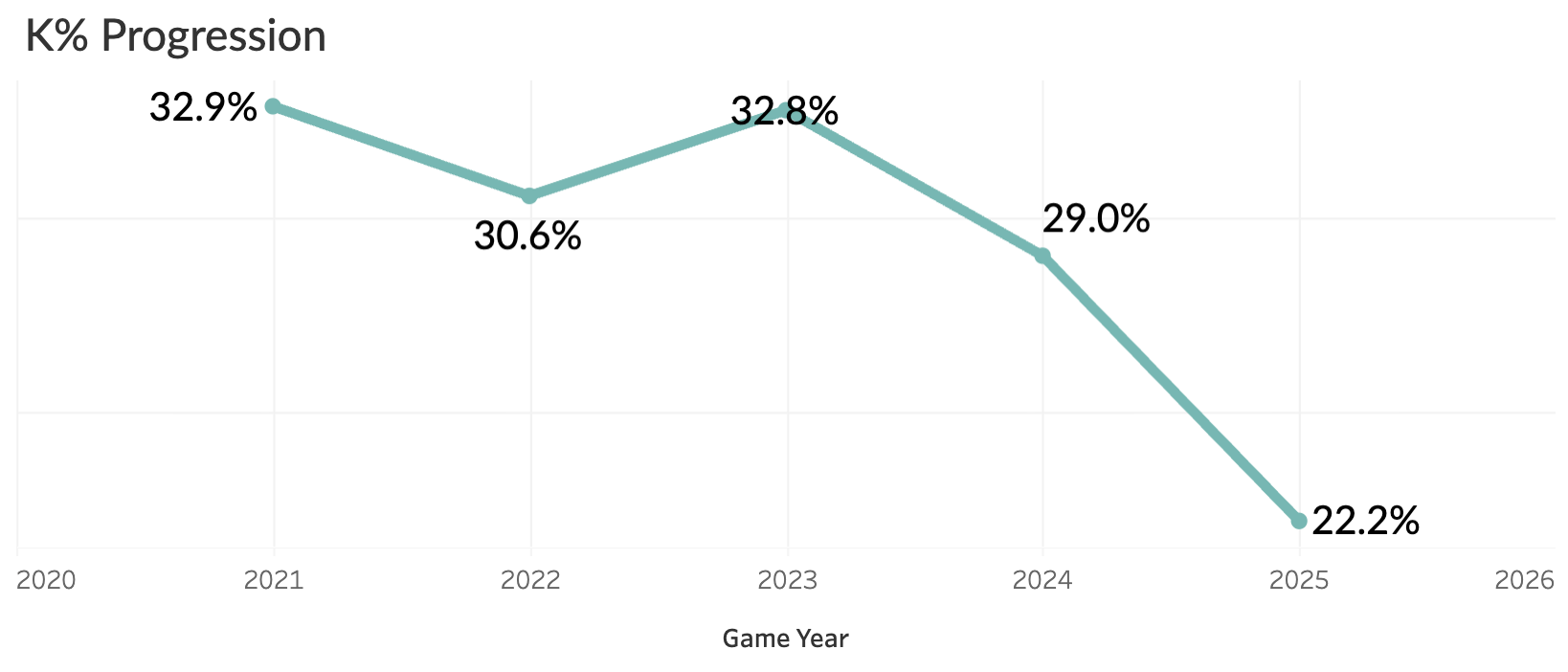
Fewer strikeouts, the same 9% walk rate, but a more than 100 point loss in OPS.
The guy isn’t young. That was his age-30 season and he’ll turn 31 this winter. His bat speed was fine, but nothing elite. The Brl% was at 13.7%, which is a good number but again, short of elite. His 105.8 EV90 is more of the same. Good, but not elite.
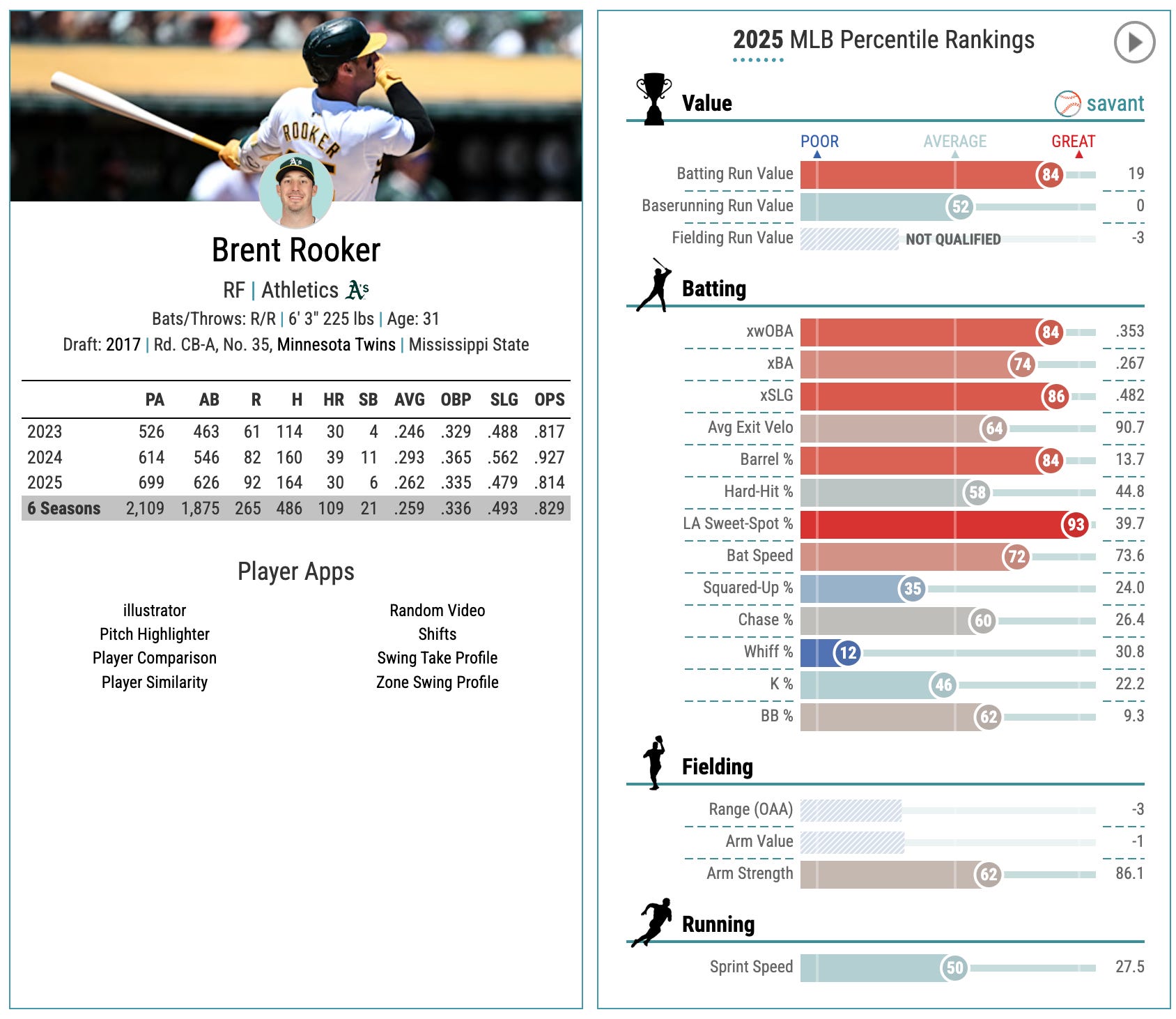
I never bought into the .293 batting average or the 39 homers in 2024. Those were both overperformances. I think what we saw in 2025 is who Rooker really is. A good power hitter and a nice run producer who will play every day while healthy. But he’s somewhat of the replaceable player variety.
You got the same(ish) numbers from guys like Vinnie P, Brandon Lowe, Spencer Torkelson, and Trent Grisham. There’s always a handful of players you can get homers and a mediocre batting average from. That doesn’t knock Rooker way down the ranks or anything; it just makes him a guy I’ll never draft ahead of ADP, especially since he’s getting into his thirties now.
Ranking
Shea Langeliers
Age: 28
Pos: C
I called Langeliers “Cal Raleigh Light” in this piece last year. And boy, did that end up looking stupid. It looked especially stupid halfway through the season before Langeliers turned it on. His first three months:
→ 238 PA, .237/.298/.456, 12 HR, 28 R, 31 RBI, 4 SB
His final three months:
→ 289 PA, .307/.346/.611, 20 HR, 47 R, 2 RBI, 3 SB
Twenty bangers after July 1st. That was in the top 20 in baseball over that time, and the dude hit .300 while he was at it! He was an elite fantasy player in the second half.
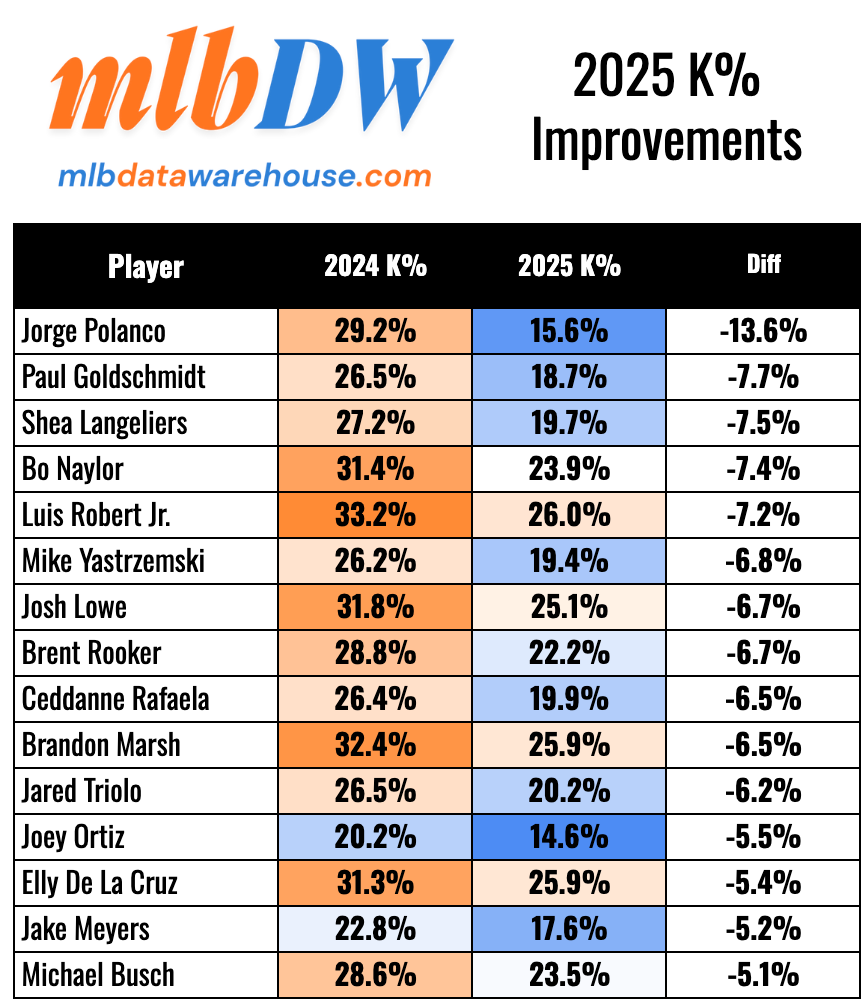
He’s always had pop, but he took everything to a new level by cutting almost eight points off his K% last year.
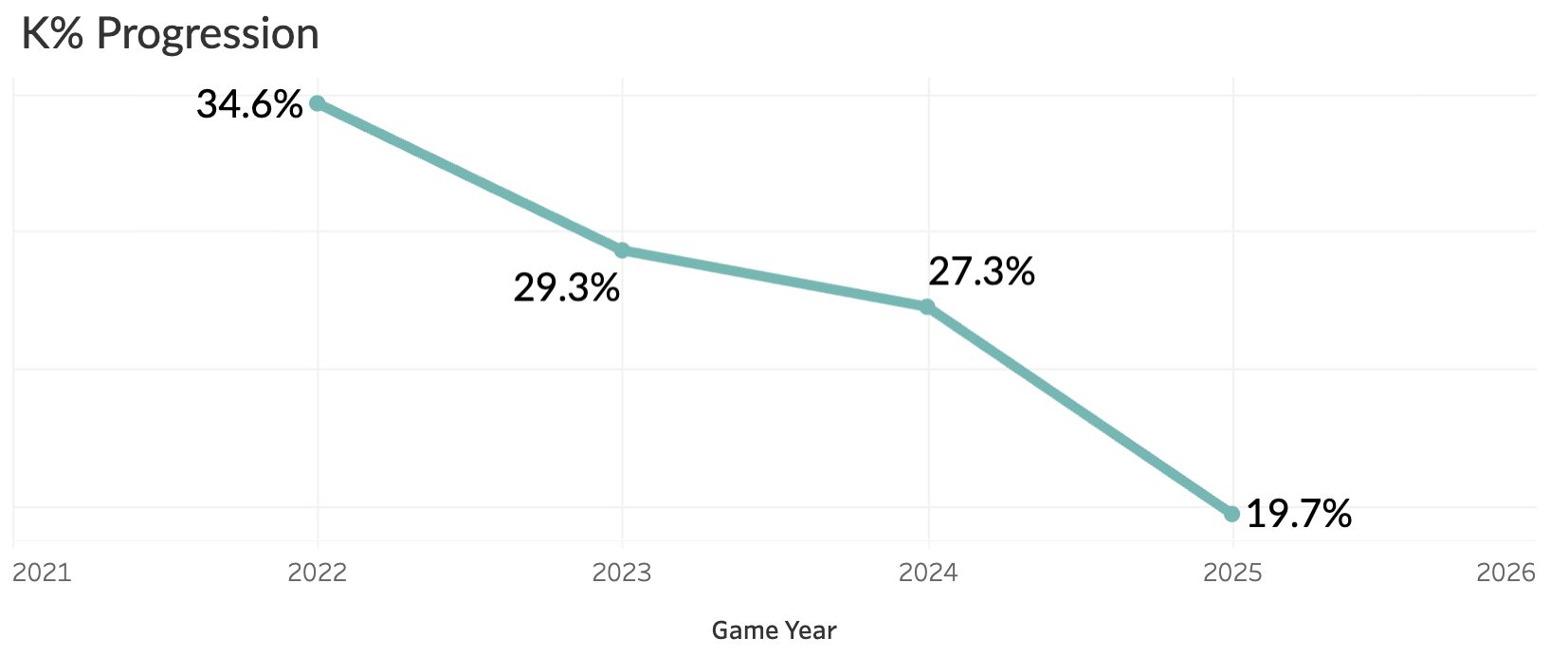
That’s impressive, impressive stuff.
Bangaliers posted a very strong 84% Zone-Contact% with a 107.8 EV90 and an 11% Brl%, and that includes the very slow start to his season.
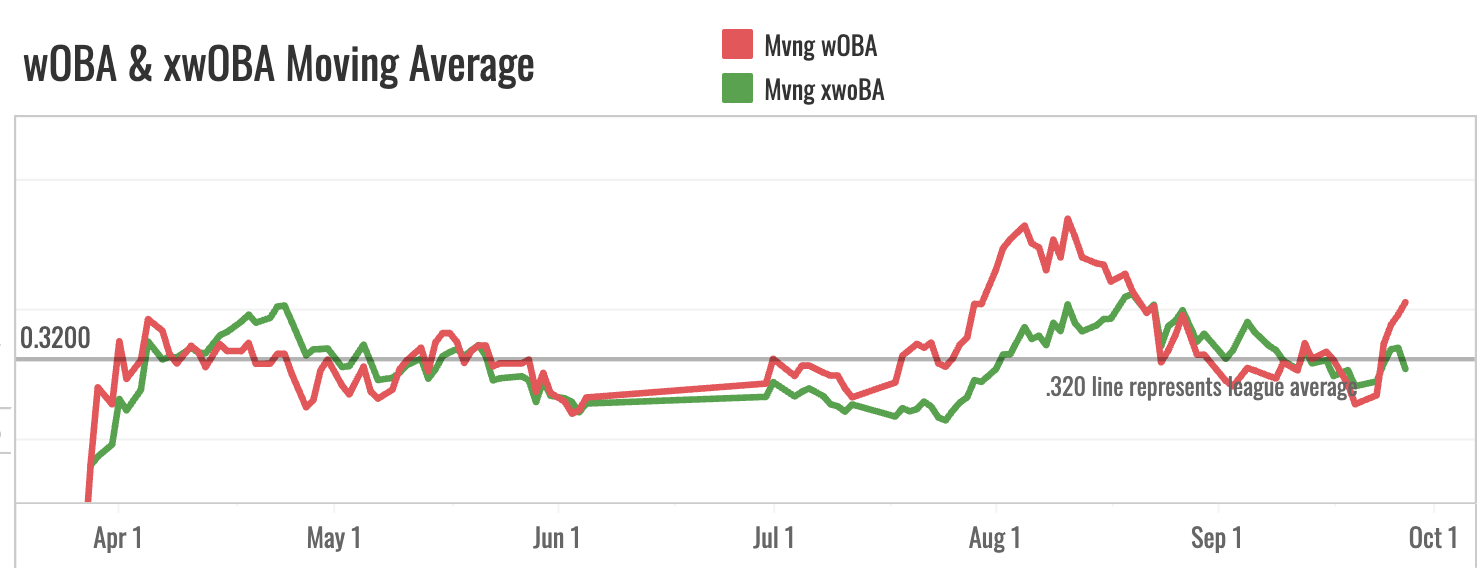
If we look at this roto value rolling plot:
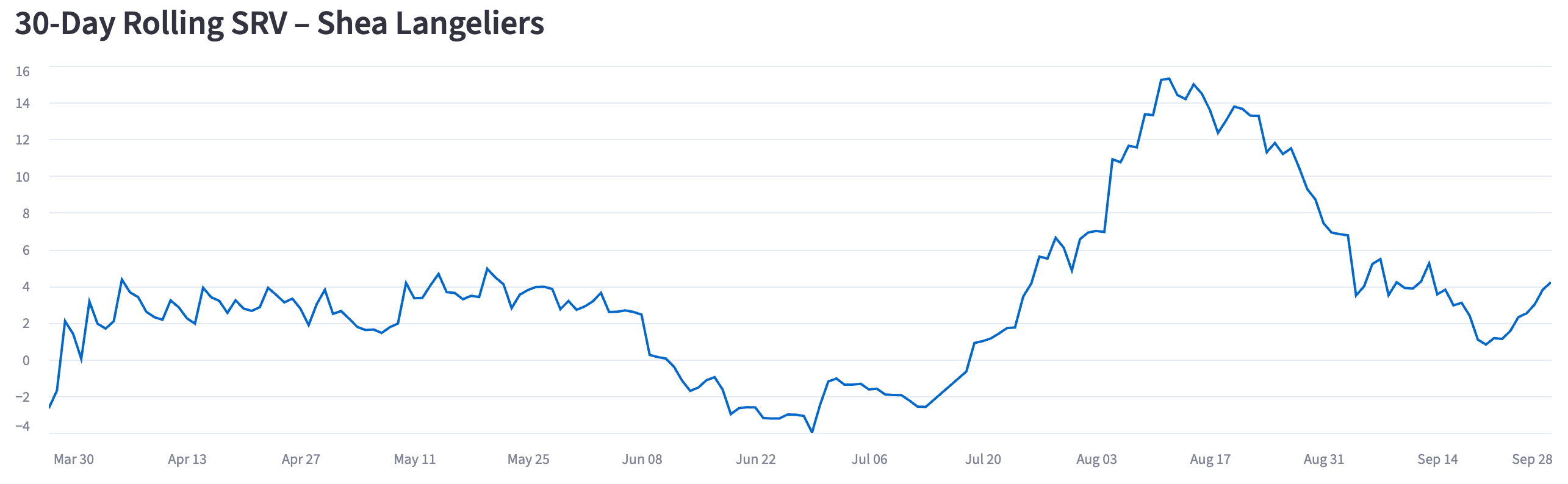
He actually outdid Cal Raleigh in standard roto value from July 1st on.
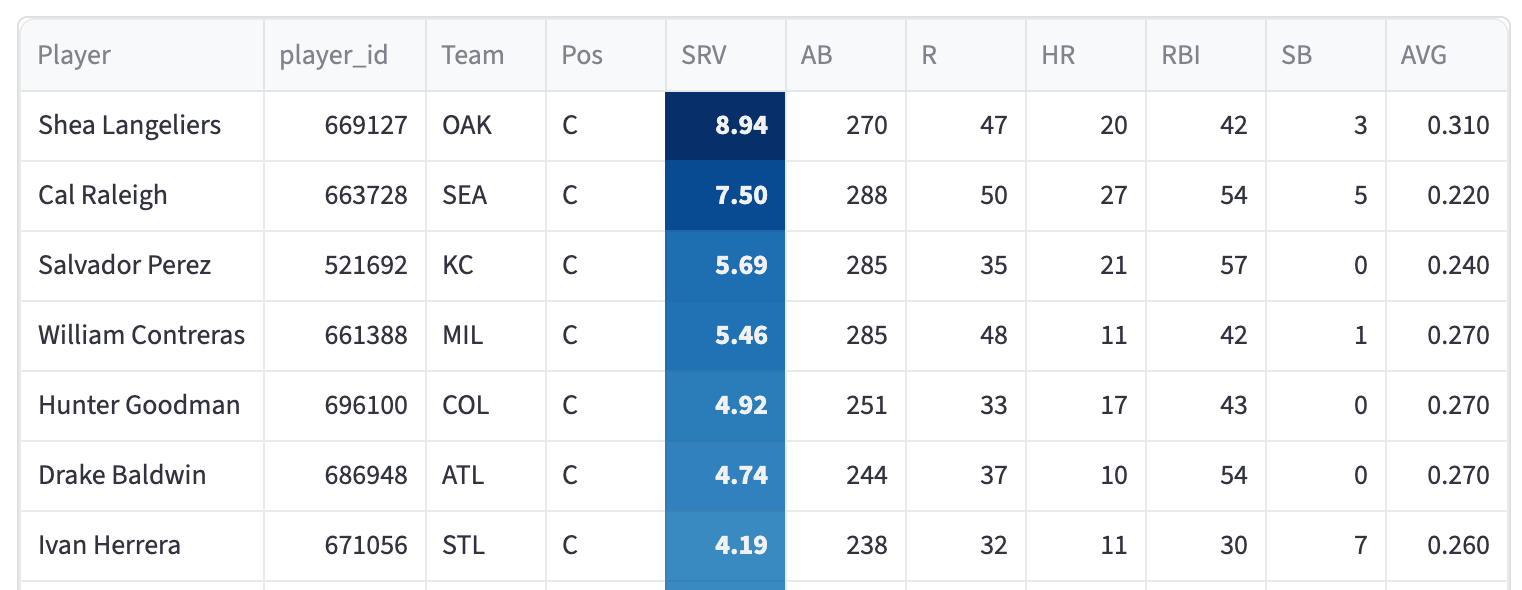
So hey, my “Cal Raleigh light” thing didn’t end up looking all that bad.
Langeliers, in a bulleted list:
Has always had great power
Is an elite defender at catcher, which locks in his playing time, and he’ll get 10+ starts at DH as well
Posted a fantastic K% in 2025
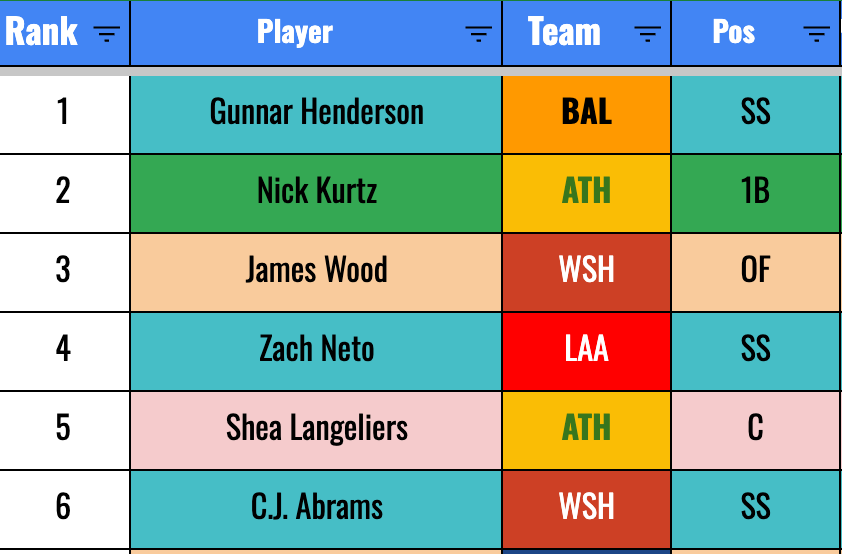
He is a top-three catcher in drafts this year. Raleigh is running away with it, of course, and then there’s this tier two with Langeliers and Contreas before you fall down a ways to the next tier.
Ranking
It will be a little while before I get to the Mariners and Brewers, so Langeliers will be my #1 catcher for a good while.
Tyler Soderstrom
Age: 24
Pos: OF/1B
I identified Soderstrom as a breakout candidate in this piece last year. Plenty of other people did as well, so I can’t crank too much hog in particular, but we were right!
→ 158 GP, .275/.345/.472, 25 HR, 8 SB, 23% K%, 8.8% BB%
The power was a bit front-loaded. Half of his homers came before June began.
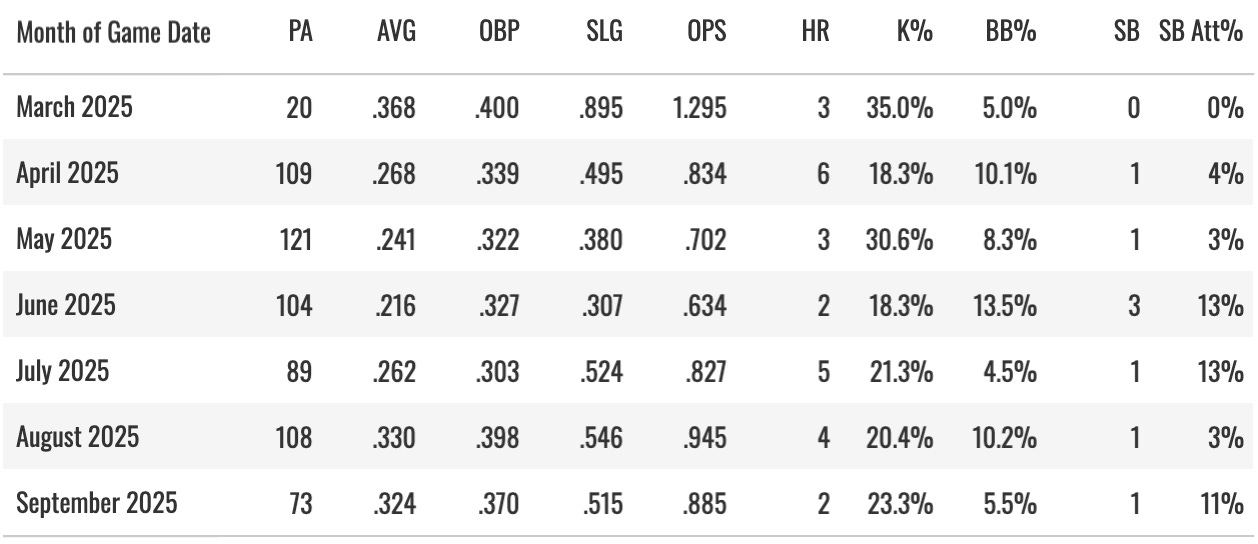
So he had three elite months, and then a very cold June, but he bounced back and ended up with a pretty nice final three months.
The fScores:
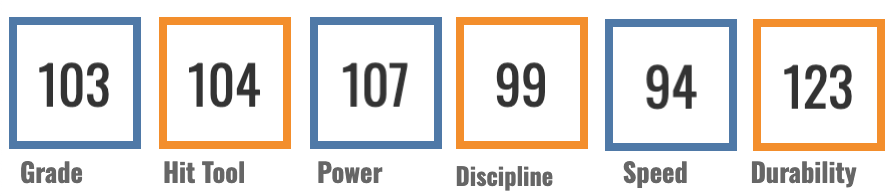
Soderstrom isn’t a budding MVP candidate. And he’s a lot like plenty of other mid-range options at the first base position. But he’s a solid player and he’s earned himself another 150+ games in 2026, and this Athletics lineup could end up being pretty decent.
Become a paid subscriber today to unlock the rest of this post as well as everything else we’re doing here at MLB DW. Projections, dashboards, apps, unmatched tools, tons of dynasty league content, and so much more.