

Eno Sarris has a story over at The Athletic about changes to minor league data capturing, and it’s a pretty interesting one, so I figured I’d weigh in.
The piece is here, limited to subscribers.
The long story short is that the MLB will now take over data-capturing technologies in the minor leagues, which means every organization and minor league park will be held to the same standards.
Allow me to reintroduce MLB Data Warehouse’s favorite economist, Thomas Sowell:
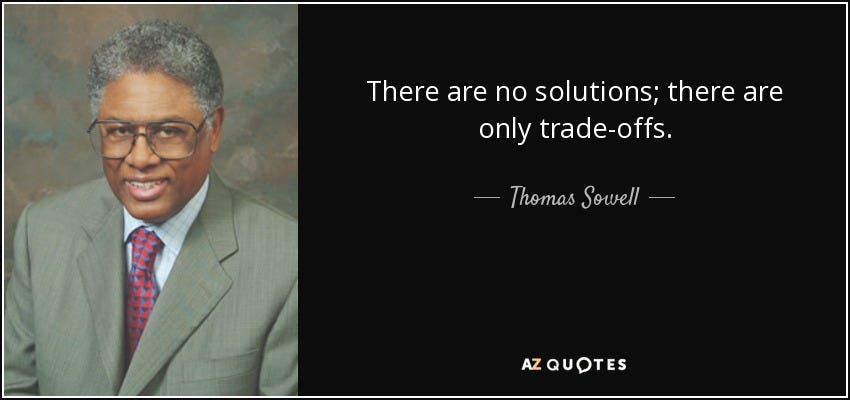
There’s one positive thing here, and one negative. And I don’t mean to connotate those words to mean “good” and “bad”. I use them in the sense that “positive” adds something and “negative” subtracts something. Not all negation is bad. But allow me to break it down.
The Positive
What this will do is raise the level of data capture and analysis potential for some organizations. If they don’t currently have the Hawkeye cameras and other tech, MLB will step in to buy it, install it, and maintain it for them.
That’s potentially very good news for us here at MLB Data Warehouse. We have that really nice Prospect Analysis Dashboard that gets all of the Statcast data for those leagues in the minors that have it publicly available. Right now, that’s restricted to only AAA and one league in A ball. Starting in 2026, this data will be captured for all minor league games.
Whether or not that will be made available to the public is still to be determined. This might not change anything at all, but it does create the potential to have full Statcast data for all minor league levels, which would be awesome.
That would greatly improve the dashboards and strengthen the fScores, which you find for every qualified minor league player on the dashboards. For more on those, check out this pod:
I always figured that we would eventually have this data for all games. That just seems to be the way that things are going. We’re never getting less data, and in every facet of life, every year we seem to get more and more data available to us.
But to hear it could happen in 2026 is pretty exciting.
The Negative
This isn’t a negative for content creators and consumers like us. It’s a negative in the case of some MLB organizations.
What could happen, as the article points out, is that some currently used technologies and processes might not end up being approved for league-wide use, which would then have MLB stripping that away from teams that have currently deployed those systems. It wouldn’t take anything away from us. I’m guessing this is all internal, private information that teams are using.
It would serve to punish the teams that are most interested in data analytics in the minor leagues. The teams that have invested the most in capturing advanced data in prospects could lose some of the stuff they’ve been doing in recent years.
Some people will think that’s good, some people will think that’s bad.
But it’s an interesting example. It’s a reminder of the realities of creating equality. There are two ways to make everybody equal:
Force the below-average people upward
Force the above-average people downward
The second one turns out to be easier to do than the first. The easiest way to create wealth equality would be to forcibly take money from the rich people and give it to the poor people. That’s good for the poor, bad for the rich, and overall bad for the economy as a whole because you’re taking resources away from the people who have proven to be the best at using them.
In the case of minor league baseball data, it’s not that serious. Nobody is going to be shedding any tears that the Rays or Dodgers or whoever it may be suddenly loses some of the advanced tech they’ve been using. In fact, us lay people would never even notice that.
But is it fair to take away advantages that teams have lawfully created for themselves just because some other teams haven’t done those things? I’d say no. But again, this isn’t something I’m going to be starting any protests for.
Conclusion
I love a good economic debate. So I had fun exploring that. But to wrap it all up, this is good news for our purposes. Maybe nothing changes in 2026; it’s yet to be seen, but this heightens our chances of having full minor league Statcast data in the near future, and that would be awesome for a guy like me who can take that data and do some cool stuff with it.
Article Credit: Eno Sarris at The Athletic